
On the 73rd day of the American-Israeli war against Iran, tensions across the Middle East surged to a new level as diplomatic channels faltered, military operations intensified, and regional powers braced for the possibility of a wider confrontation.
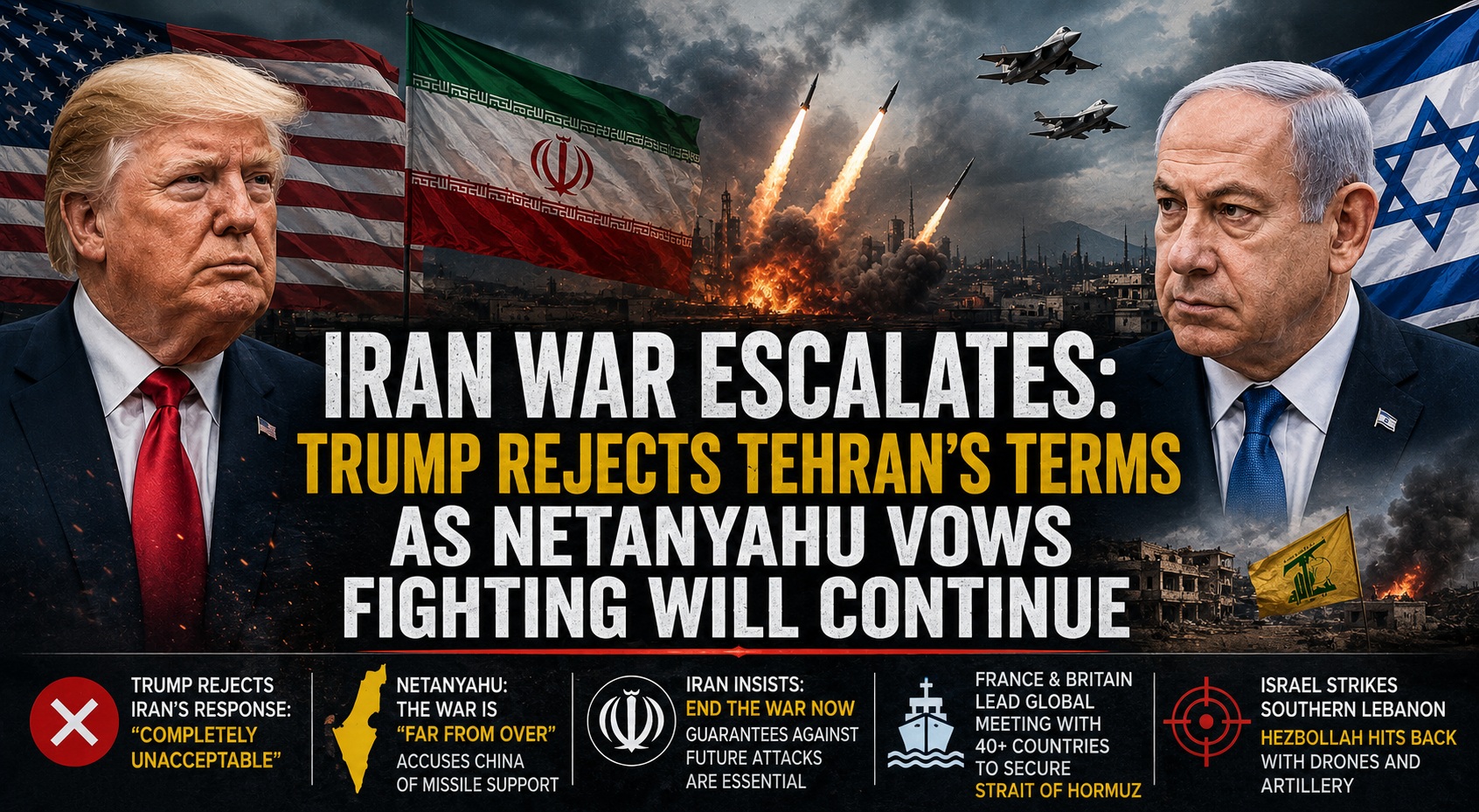
U.S. President Donald Trump sharply rejected Iran’s latest response — delivered through Pakistani mediators — to Washington’s proposal aimed at ending the conflict. Calling Tehran’s position “completely unacceptable,” Trump signaled that the White House is unwilling to back down without major concessions from the Iranian leadership.
In Israel, Prime Minister Benjamin Netanyahu declared that the war was “far from over,” despite what he described as significant military achievements against Iranian targets. Netanyahu also escalated the political dimension of the conflict by accusing China of supplying technological support and critical components used in the production of Iranian missiles, widening concerns that global powers are becoming increasingly entangled in the crisis.
Tehran, however, appeared unmoved by the mounting pressure. According to Iran’s Tasnim News Agency, Iranian officials insisted that any path toward de-escalation must begin with an immediate end to the war and firm guarantees against future attacks. Another Iranian source dismissed Trump’s reaction entirely, stating that “no one in Iran is drafting plans to satisfy the American president.”
As battlefield tensions grow, European powers are racing to prevent the conflict from spiraling into a catastrophe that could destabilize global trade and energy markets. France and Britain are leading efforts to convene a high-level international meeting beginning today, bringing together representatives from more than 40 countries and organizations to secure maritime navigation through the Strait of Hormuz — one of the world’s most strategically vital waterways.
Meanwhile, the Lebanese front continues to burn. Israeli warplanes carried out dozens of strikes across villages and towns in southern Lebanon, while Hezbollah announced a series of retaliatory operations targeting Israeli military vehicles, troops, and a command headquarters using drones and artillery fire.
With missiles crossing borders, diplomacy struggling to gain ground, and multiple fronts igniting simultaneously, the region now stands at a dangerous crossroads. What began as a confrontation between rivals is rapidly evolving into a broader geopolitical showdown that could reshape the balance of power across the Middle East.