
BEIRUT — The cameras were rolling, but the atmosphere inside the room felt less like a television studio and more like a high-stakes war room.
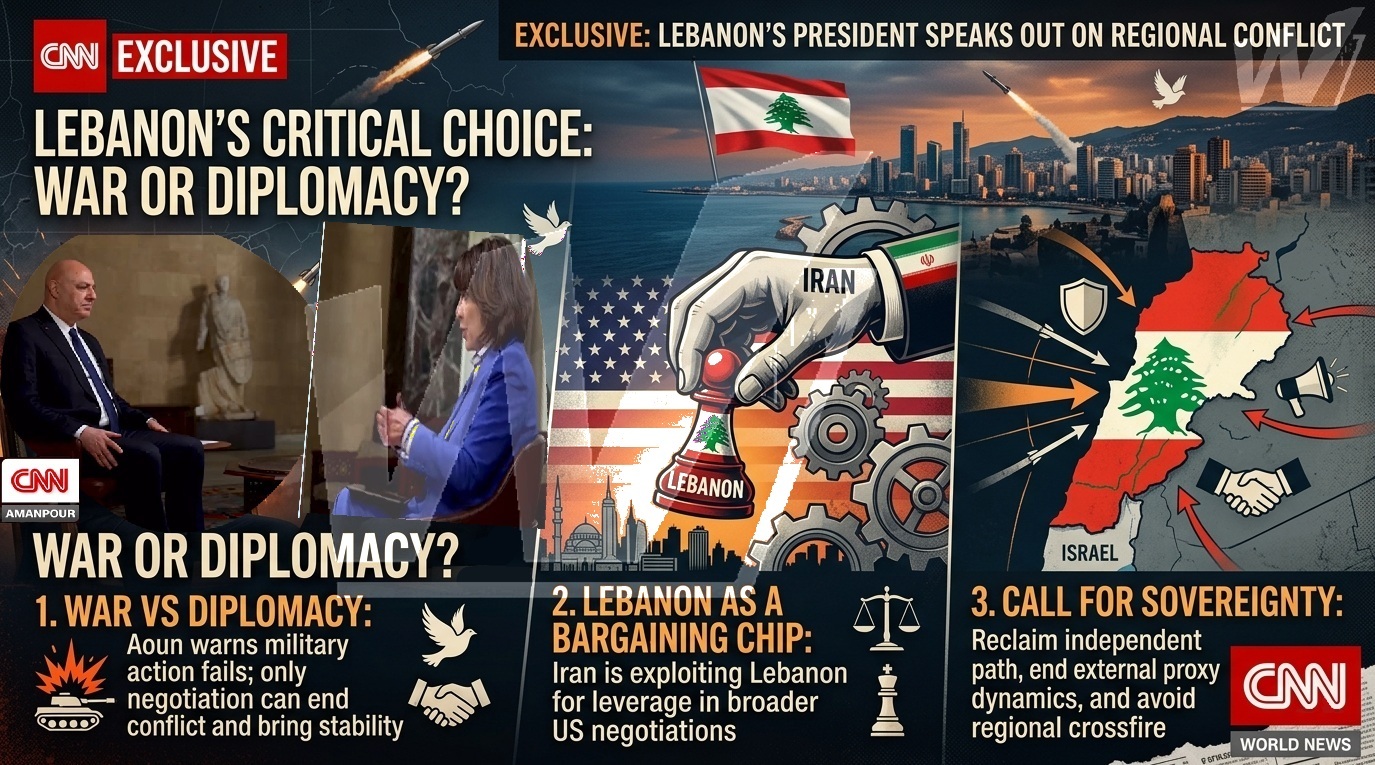
In a rare, high-octane exclusive with CNN’s Christiane Amanpour, Lebanese President Joseph Aoun shattered months of diplomatic silence. He delivered a blistering, high-stakes assessment of a nation teetering on the absolute brink of total engulfment. With the shadow of a devastating regional war looming larger by the hour, Aoun bypassed standard diplomatic pleasantries, choosing instead to drop a series of political bombshells that are already reverberating through the corridors of power from Washington to Tehran.
The Ultimatum: A Thin Line Between Peace and Fire
With Israeli airstrikes and Hezbollah rocket fire locking the region into a relentless, escalating feedback loop, Aoun drew a definitive line in the sand. This is no longer a localized skirmish; it is a ticking time bomb.
The President issued a stark, zero-hour ultimatum to both Israel and Hezbollah: they stand at a critical, historic crossroads. One path leads to unchecked, catastrophic escalation; the other, to the negotiating table. Aoun pulled no punches, declaring that a purely military victory is an illusion. The current kinetic strategy will not break the deadlock — only cold, hard diplomacy can pull the region back from the precipice.
The Tehran Leverage Play
Then came the moment that sent shockwaves through the diplomatic corps. Turning his sights toward regional interference, President Aoun leveled a direct, unprecedented strike at Lebanon’s powerful neighbor to the east.
In a searing indictment of foreign proxy warfare, Aoun exposed the brutal reality of Lebanon’s predicament: Tehran is using the country as a human shield and a bargaining chip. He openly accused Iran of weaponizing Lebanon’s instability, converting the blood and sovereignty of its people into raw leverage for its own high-stakes geopolitical poker game with the United States.
A Nation Suffocating in the Crossfire
For Lebanon, the clock is running out. Aoun’s words painted a vivid picture of a presidency — and a population — suffocating under the weight of external forces. The frustration was palpable as he detailed how Lebanese stability is being systematically dismantled by proxy dynamics beyond its control.
This was more than an interview; it was a fierce, desperate battle cry for regional sovereignty. Aoun’s final directive was unmistakable: Lebanon must violently tear itself away from the regional crossfire and aggressively reclaim its own independent destiny through immediate, uncompromising diplomatic channels.
The pieces on the Middle Eastern chessboard are moving faster than ever. As President Aoun steps directly into the line of fire, the world is left watching the countdown: will the factions choose the agonizing path of negotiation, or will the match be struck?