
From the Strait of Hormuz to U.S. Bases Across the Region, a Dangerous New Chapter Unfolds
The night sky above the Persian Gulf was already tense.
Radar screens glowed in command centers. Fighter aircraft circled over strategic waterways. Naval crews scanned the darkness beyond the horizon. Then, in a matter of hours, the fragile balance that had held for weeks shattered.
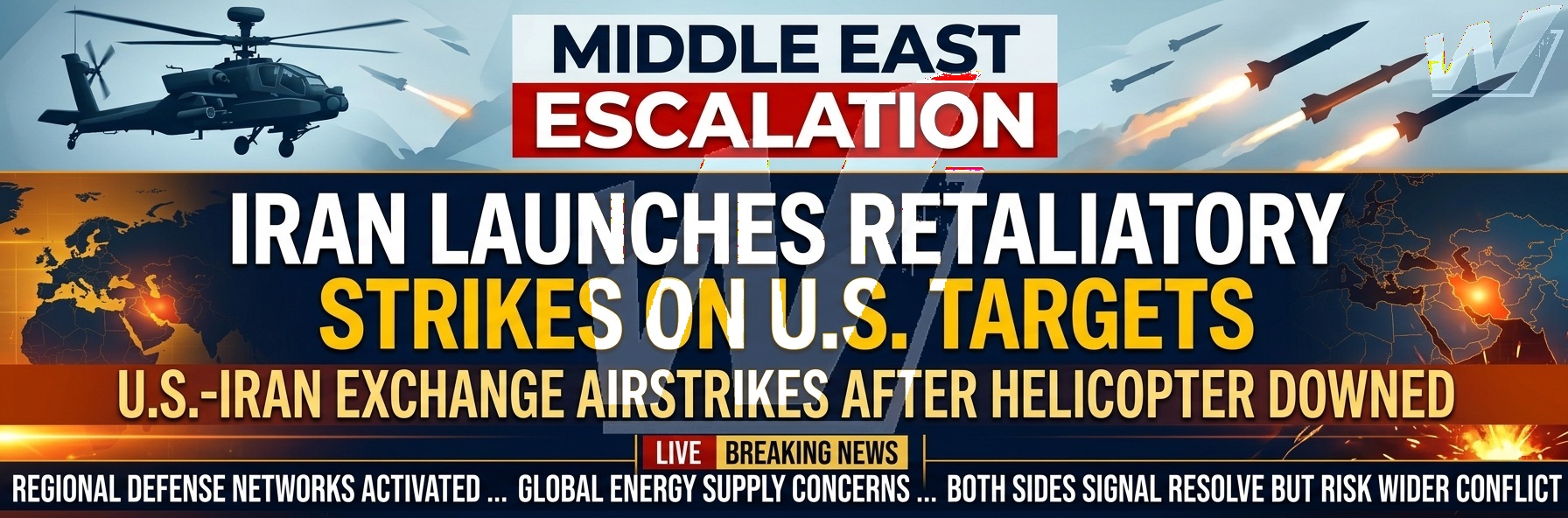
What began with the loss of a U.S. Army Apache helicopter near the Strait of Hormuz has now erupted into one of the most dangerous direct confrontations between Washington and Tehran in recent years.
President Donald Trump publicly accused Iran of shooting down the helicopter and vowed that the United States would respond. The warning was not an empty one. Within hours, American forces launched a series of airstrikes against Iranian military targets, describing them as defensive and necessary. Iran answered with force of its own, launching retaliatory attacks against U.S. positions across the Middle East.
Suddenly, the region found itself staring into a familiar abyss.
The Spark That Ignited the Crisis
According to U.S. officials, the Apache helicopter went down near one of the world’s most strategically important waterways—the Strait of Hormuz, the narrow maritime corridor through which a significant share of global energy supplies passes every day.
The incident immediately triggered alarm inside the White House and military headquarters across the region.
Trump’s response was swift and uncompromising.
“We must respond,” the president declared, framing the helicopter’s loss as a direct act of aggression against the United States. Military planners were already moving. Target packages were prepared. Aircraft were armed. Orders were issued.
Then the bombs began to fall.
Washington Strikes
As darkness spread across the Gulf, American aircraft targeted Iranian military infrastructure, including radar systems, air-defense sites, surveillance facilities, and command assets linked to operations near the Strait of Hormuz.
U.S. Central Command described the attacks as “self-defense strikes,” arguing that they were intended to deter further attacks on American personnel and assets rather than trigger a broader war.
Yet in conflicts such as these, intentions rarely determine outcomes.
Explosions echoed across southern Iran.
Columns of smoke rose over military installations.
And in Tehran, military commanders prepared their answer.
Iran Responds
The retaliation came quickly.
Iranian forces launched missiles and drones against U.S. military positions across the region, signaling that Tehran had no intention of absorbing the American strikes without a response.
Air-defense systems in several countries were activated. Interceptors raced into the night sky. Military bases shifted to maximum alert. Personnel moved into hardened shelters as incoming threats were tracked across multiple theaters.
For several tense hours, commanders on both sides watched events unfold in real time.
Every radar contact mattered.
Every launch warning carried the potential to ignite something far larger.
The Shadow of Escalation
The most alarming aspect of the latest confrontation is not the strikes themselves—it is what they represent.
For months, U.S.-Iran tensions have simmered beneath the surface of a broader regional conflict involving Israel, Iranian-backed groups, maritime security operations, and competing military deployments across the Gulf.
Now those tensions have become direct.
No proxies.
No intermediaries.
American aircraft striking Iranian targets.
Iranian missiles aimed at American positions.
The risk of miscalculation has never been higher.
Military analysts warn that even a limited exchange can spiral unexpectedly. A missile that reaches its target. A fighter aircraft shot down. A naval vessel damaged in crowded Gulf waters. Any one incident could transform a contained crisis into a regional war.
Markets, Shipping, and Global Anxiety
The world is watching closely because what happens in the Gulf rarely stays in the Gulf.
The Strait of Hormuz remains one of the most critical energy chokepoints on Earth. Any sustained military confrontation threatens shipping routes, insurance markets, and global energy supplies.
Shipping companies are already reviewing risk assessments. Energy traders are monitoring developments minute by minute. Governments across Europe, Asia, and the Middle East are urging restraint while simultaneously preparing contingency plans should the conflict expand.
Behind closed doors, diplomats are scrambling to prevent the next strike from becoming the strike that changes everything.
What Comes Next?
That question now hangs over every military headquarters in the region.
Washington insists it acted in self-defense.
Tehran insists it had the right to retaliate.
Both sides claim they do not seek a wider war.
Yet history has repeatedly shown how quickly crises in the Middle East can outrun the intentions of the leaders directing them.
Tonight, fighter aircraft remain in the air.
Warships remain on alert.
Missile defenses remain activated.
And across the Gulf, millions of people are waiting to see whether this latest exchange marks the beginning of de-escalation—or merely the opening chapter of a much larger conflict.
For now, the guns have not fallen silent.
They are simply waiting for the next order.