

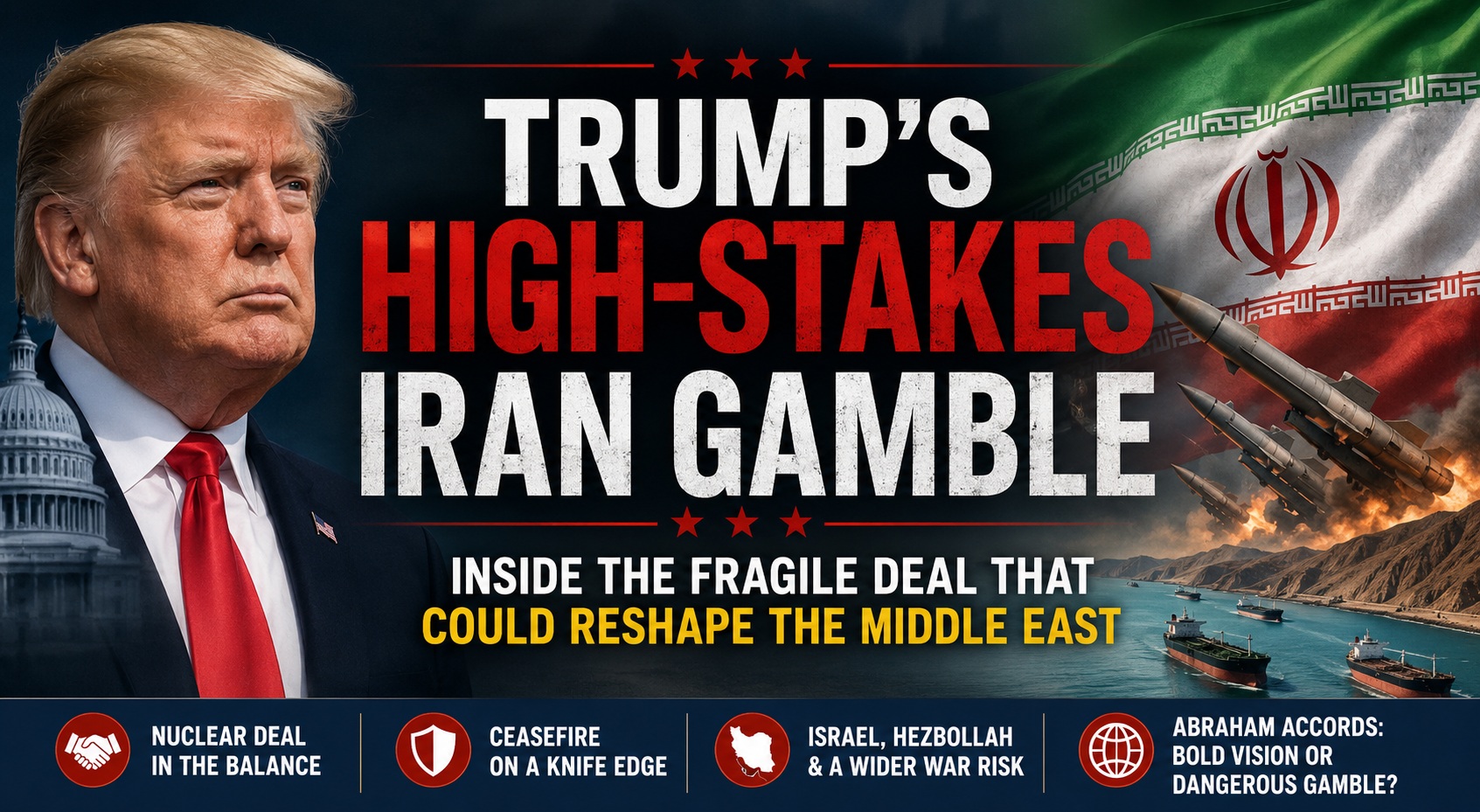
As Washington edges closer to what could become the most explosive diplomatic gamble of the year, President Donald Trump is preparing for a high-stakes Cabinet showdown inside the White House — a meeting that may determine whether the fragile path toward ending the war with Iran survives… or collapses into chaos.
Behind closed doors, tension is mounting.
Trump has publicly projected confidence, insisting that Tehran and Washington have “largely negotiated” the framework of a settlement. But beneath the optimistic rhetoric lies a volatile reality: ceasefires hanging by a thread, military strikes reigniting distrust, and growing fears among Republicans that Iran could emerge from the conflict wounded — yet more dangerous than ever.
The stakes could not be higher.
At the center of the negotiations is a plan that would reopen the strategically vital Strait of Hormuz while forcing Iran to surrender its stockpile of highly enriched uranium. In exchange, Tehran could receive sweeping sanctions relief — a move already sparking outrage among some of Trump’s closest conservative allies, who warn the agreement risks becoming a modern echo of the controversial Obama-era nuclear deal Trump once tore apart.
And the battlefield is still alive.
Even as diplomats scramble for compromise, U.S. forces launched what the Pentagon described as “defensive strikes” against missile sites and mine-laying vessels in southern Iran earlier this week. Tehran immediately blasted the operation as proof that Washington cannot be trusted, casting a shadow over negotiations already teetering on uncertainty.
Inside Trump’s political circle, cracks are beginning to show.
Influential Republican senators including Lindsey Graham, Ted Cruz, and Roger Wicker have openly questioned whether the deal gives away too much. Their fear is simple: that billions in sanctions relief could eventually fuel Iran’s military resurgence and strengthen proxy forces like Hezbollah and Hamas across the region.
Meanwhile, another dangerous question looms over the negotiations: Lebanon.
Iran is reportedly demanding that any ceasefire agreement also restrict Israeli military operations against Hezbollah. Yet Israeli Prime Minister Benjamin Netanyahu has signaled the opposite direction, announcing an expansion of military operations inside Lebanon — a move that threatens to ignite an entirely new phase of regional confrontation.
And then came Trump’s most ambitious twist yet.
In a dramatic push behind the scenes, Trump reportedly urged several Muslim-majority nations — including Saudi Arabia, Qatar, and Pakistan — to join the historic Abraham Accords as part of a broader regional reset tied to the Iran deal.
But diplomats say the proposal was met with near silence.
Many Middle Eastern allies remain deeply skeptical, especially as the Palestinian issue continues to block normalization efforts with Israel. Behind the scenes, Gulf leaders reportedly fear that any financial breathing room granted to Tehran could quickly be transformed into missiles, militias, and renewed regional instability.
Now, with midterm elections approaching, fuel prices climbing, and the Republican base divided, Trump faces a defining test of his presidency.
Will he emerge as the leader who ended a dangerous war and reshaped the Middle East?
Or will this fragile agreement become the spark that empowers Iran and reshapes the region in ways Washington can no longer control?
Source: AP news